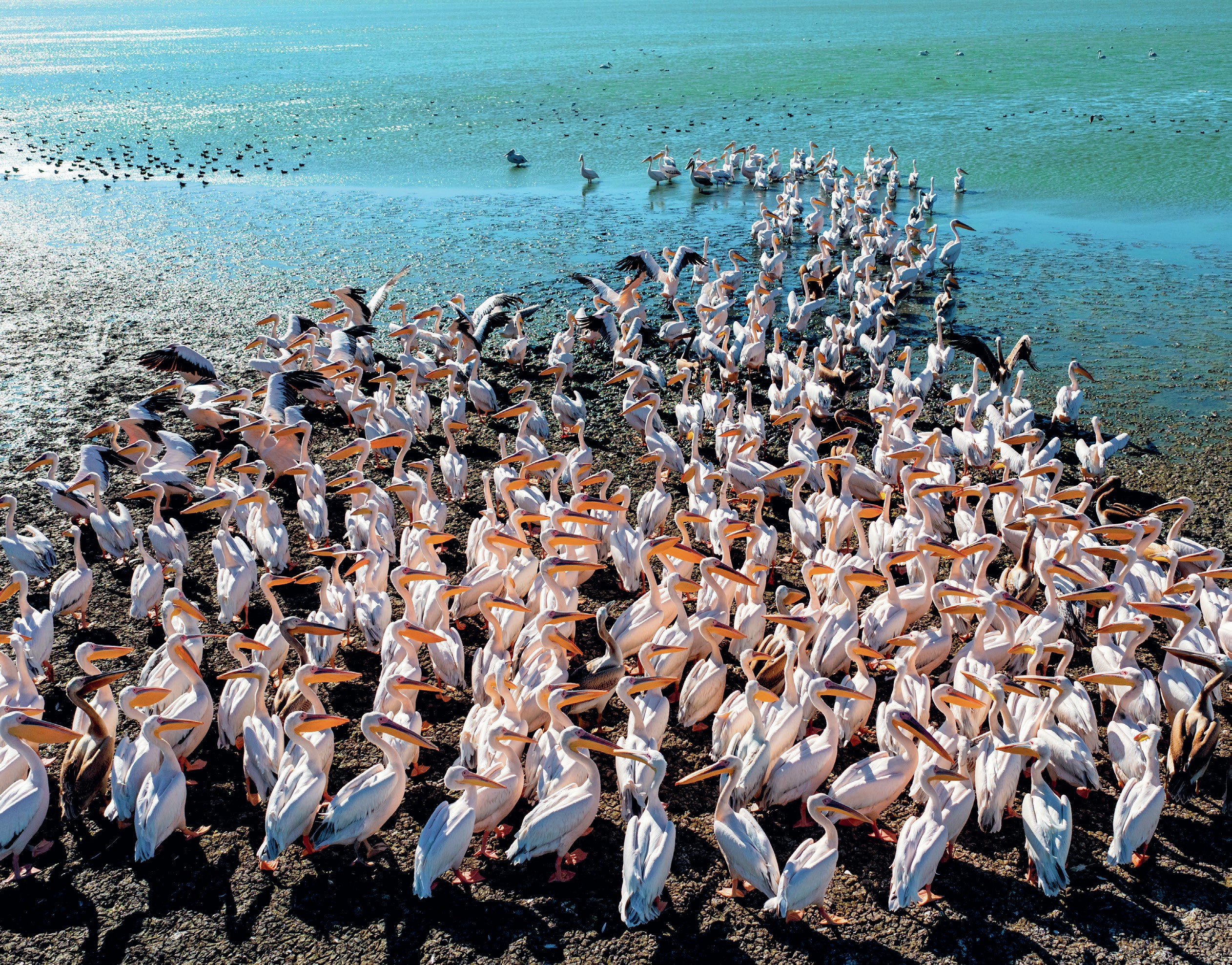
This is a pod of pelicans, pictured in October 2025. They have congregated on the shore of Manyas Lake in northwest Türkiye. This lake offers a rest stop for many migratory bird species, including herons and storks as well as pelicans. It also provides irrigation water for farmers with adjacent land holdings. The total shoreline of the lake is significantly shorter than just 2 years ago: the lake surface area has shrunk by around 25%. This is because of drought. A mixture of low rainfall and high summer temperatures have served to reduce the water volume significantly. This has affected lake ecology and forced farmers to bear the cost of going further to extract water, while having their ‘water quotas’ reduced by the regional government.
Manyas Lake is not, however, unique. A global analysis of nearly 2,000 inland water bodies published in 2023, examined reservoirs and natural lakes. In over 50% of cases, between 1992 and 2000 the volume of these freshwater bodies declined. This was caused by a mixture of atmospheric warming, water extraction by people and sedimentation (in the case of reservoirs). While humans cannot control climate, the problems experienced at Manyas Lake and elsewhere point to the need for better management of precious freshwater resources and associated habitats, such as wetlands and marshes. Without this, lake resilience to drought can be fragile.
Your organisation does not have access to this article.
Sign up today to give your students the edge they need to achieve their best grades with subject expertise
Subscribe