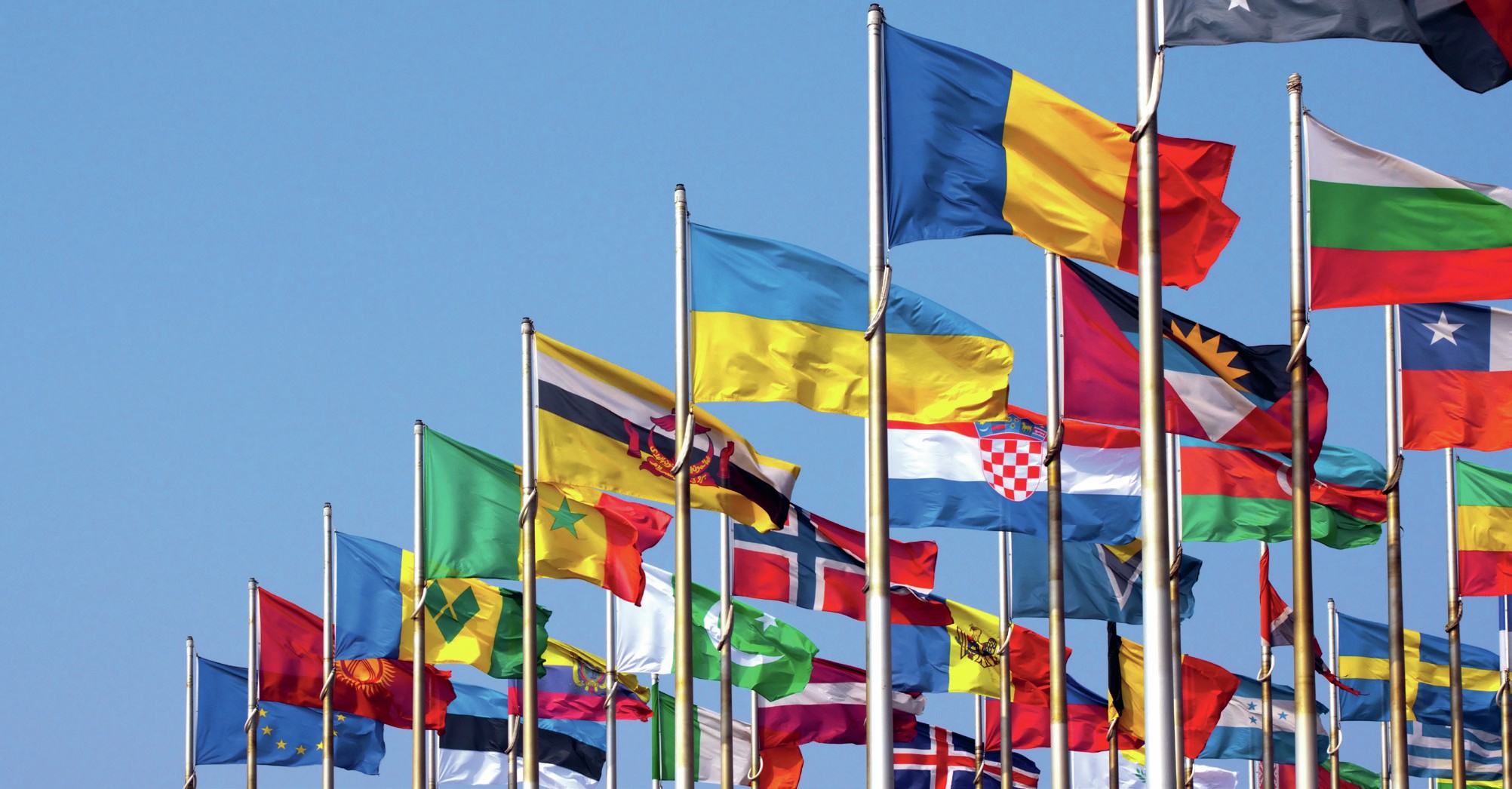
Crosses, dragons, birds, a camel and an assault rifle. All these and more are found on the world’s flags – vital emblems of sovereignty for states, for nations that form part of a state (such as Scotland, Wales and Catalonia), and for those who aspire to nationhood (such as Australia’s indigenous peoples). From childhood, we learn to identify the flags of other countries (handy in general-knowledge quizzes). They can be seen on athletes’ vests, on key rings and car bumpers. Armies carry them into battle. Flags are lowered to half-mast on days of national remembrance and flown on days of celebration.
National flags are complex semiotic objects (Figure 1). Though usually simple in design, they become densely layered with political, social and cultural meanings. They function as both symbols of current or potential new states (territorially bounded, legally constituted entities) and avatars of imagined communities. The meanings are fluid: what a flag signifies depends on the context and who is raising it for what reason.
Your organisation does not have access to this article.
Sign up today to give your students the edge they need to achieve their best grades with subject expertise
Subscribe