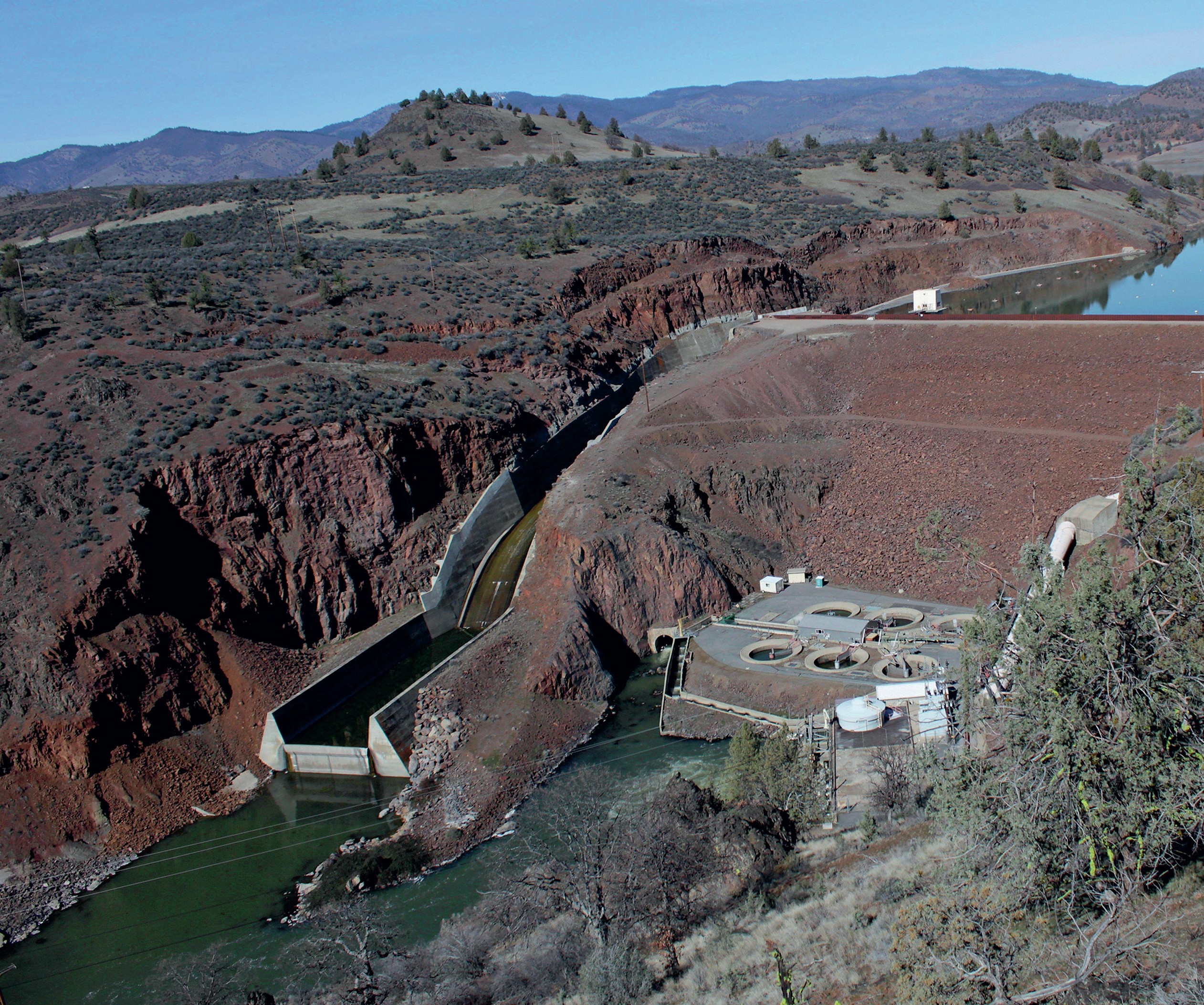
The photograph featured here of the Iron Gate Dam on the Klamath River in California was taken in 2020. But if you went there today the dam, the reservoir and the hydroelectric power (HEP) station would no longer be there because this dam has gone, and so have the other three dams built across the Klamath River over 100 years ago. Now the river is slowly returning to its original course.
The Klamath River is the second-longest river in California, winding 250 miles from the Oregon desert, through the Rocky Mountains to the Pacific Ocean (see Figure 1). However, the traditional lands of the Yurok people stretch for about 45 miles along the Klamath river, and these indigenous peoples have always relied on the river and surrounding land for both food and water. The river was particularly important for its abundance of fish, and especially the Chinook salmon, which were important to the Yurok people but were also sold along the west coast of the USA.
Your organisation does not have access to this article.
Sign up today to give your students the edge they need to achieve their best grades with subject expertise
Subscribe