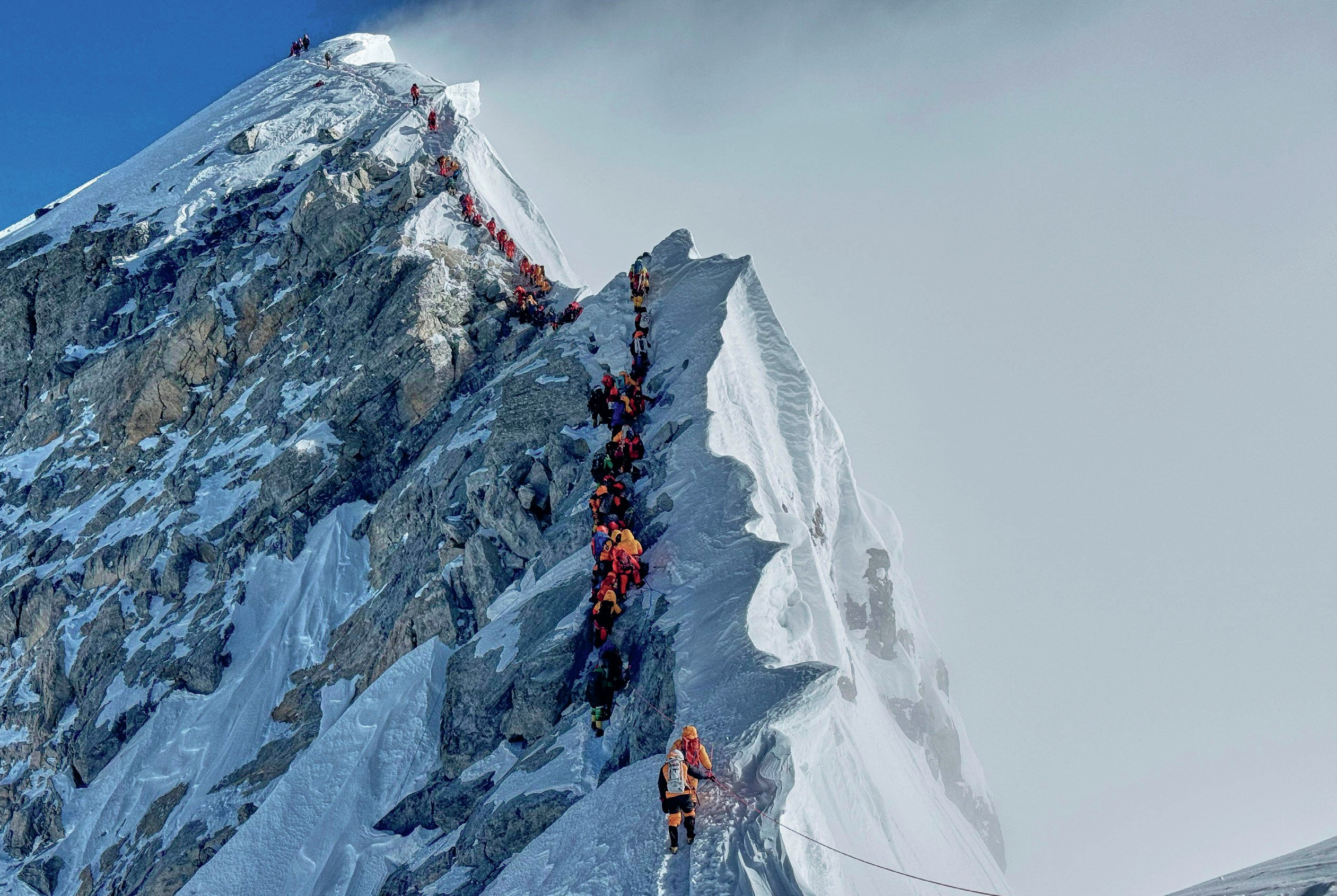
Imagine you are standing near the top of Mt Everest, the highest point on Earth. But instead of feeling like the only person up there, you’re stuck in a long line of climbers, all waiting their turn to reach the summit. Every year, increasing numbers of people are making the dangerous trek to the top of Everest, but with so many climbers, the mountain is becoming overcrowded, and the risks are higher than ever. What is driving so many people to take on this dangerous challenge, and what impact does it have on the people and environment of Nepal?
Nepal is a small country, famous for its stunning landscapes, rich culture, and the world’s highest mountain range, the Himalayas, which includes Mt Everest. Nepal is classed as a newly emerging economy (NEE) thanks to the development of its tourism sector. However, development is not easy and faces many challenges:
Your organisation does not have access to this article.
Sign up today to give your students the edge they need to achieve their best grades with subject expertise
Subscribe