
© Mark Garlick/Science Photo Library
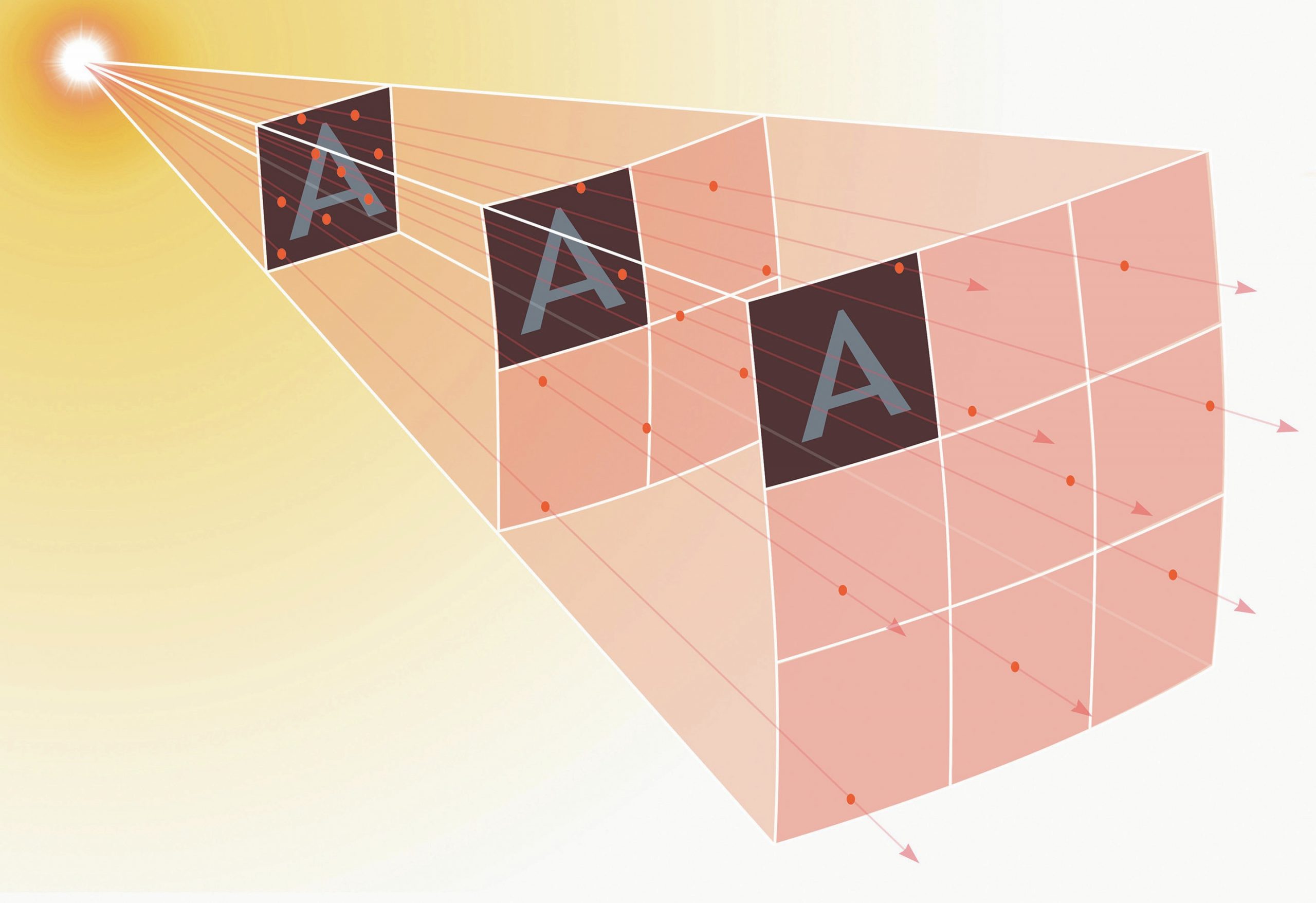
Why does a torch look bright up close but faint when you step back? This simple observation reveals one of the most elegant physics principles – the inverse square law. Inverse square laws describe how certain physical effects get weaker with distance. They appear everywhere in nature: in the spreading of light and radiation, the pull of gravity, the strength of electric forces and even the loudness of sound.
In this ‘Mathskit’ we will explore what inverse square laws are, why they happen, what the mysterious 1/4πr² term means and when these laws do not quite hold.
Your organisation does not have access to this article.
Sign up today to give your students the edge they need to achieve their best grades with subject expertise
Subscribe