
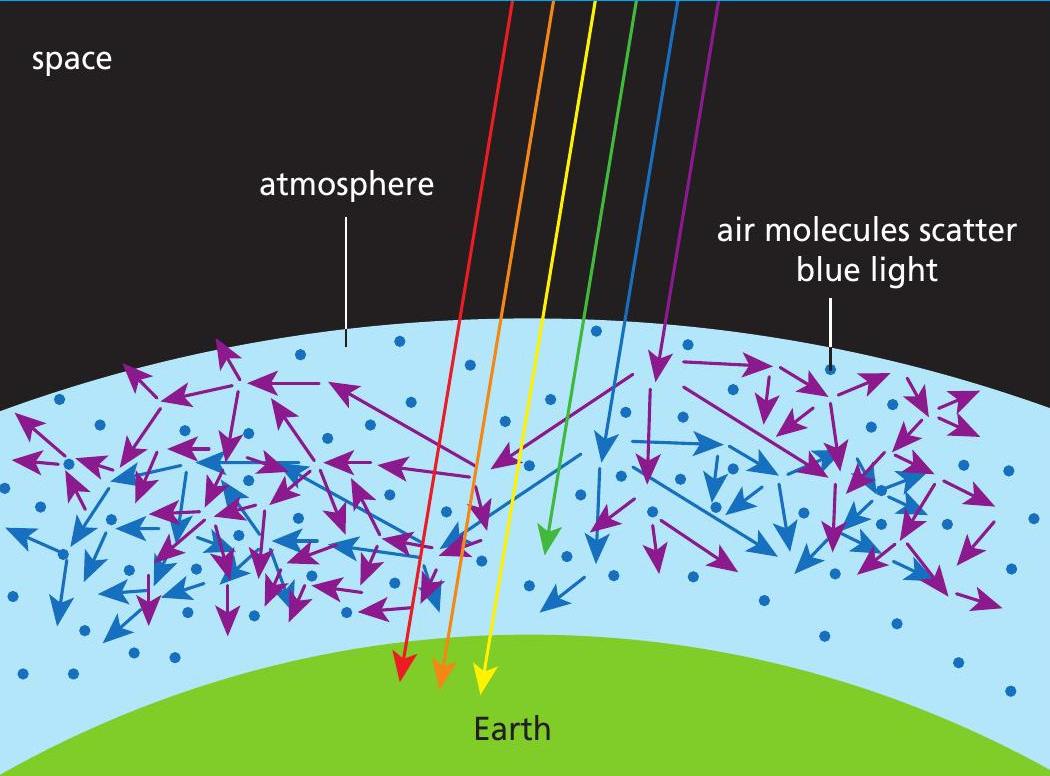
About 99% of Earth’s atmosphere comprises nitrogen and oxygen molecules, which are much smaller than the wavelengths of visible light. This property results in Rayleigh scattering, in which sunlight is scattered elastically, with photons of shorter, blue wavelengths much more likely to be scattered than photons of longer, red wavelengths.
As blue light is scattered in many different directions by the atmosphere it reaches our eyes from all directions, and is the colour that our eyes predominantly see in the sky (1). (Violet light is scattered even more than blue light, but there is much less of it in sunlight and our eyes are more sensitive to blue.)
Your organisation does not have access to this article.
Sign up today to give your students the edge they need to achieve their best grades with subject expertise
Subscribe