
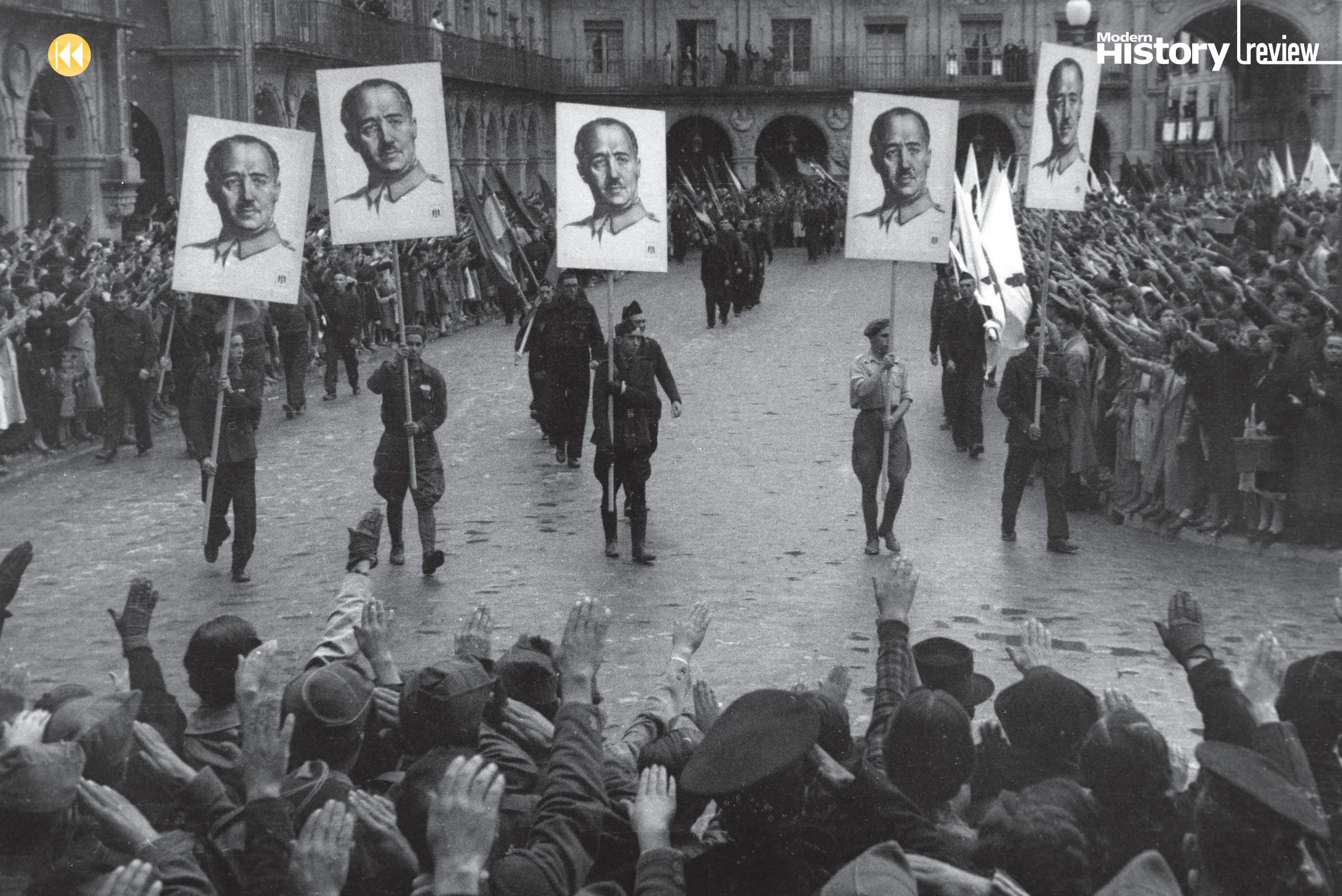
Early-twentieth-century Spain was undergoing a faltering transition to industrial modernity. There were only scattered outposts of industrialisation, such as the mines of Asturias in the north. Although the country was a dynastic state united around a single monarchy, it was poorly integrated. It remained a patchwork quilt of provinces – such as Galicia, the Basque provinces, Catalunya, Andalucia and the Balearic Islands – with a variety of languages and cultures. The dominant province was Castile, home to the capital, Madrid, and the ruling Bourbon monarchy. Spain remained poor and weak. Defeat in the Rif War of the early 1920s by indigenous Berber armies in North Africa confirmed the decline of its once-powerful empire.
In the 1920s, the old elites, based on landed wealth and focused on the monarchy and its twin enforcers – the military and the Catholic church – were still powerful, politically and spiritually. However, new modern classes – industrial and financial capitalists, managers, workers – were growing. Despite conflicting economic interests, the new classes shared hostility to monarchical domination. As a result, despite differences, liberals, socialists, minority nationalists and even some conservatives shared strong anticlerical and Republican sympathies.
Your organisation does not have access to this article.
Sign up today to give your students the edge they need to achieve their best grades with subject expertise
Subscribe