In the years between the two world wars, visual media began to develop rapidly. While cinema and eventually television matured, photography, in various forms, also became a more sophisticated and flexible medium, increasingly open to non-specialists. Cameras became smaller, more portable and less complicated to operate. As a result, photo enthusiasts could use them for a wider variety of purposes.
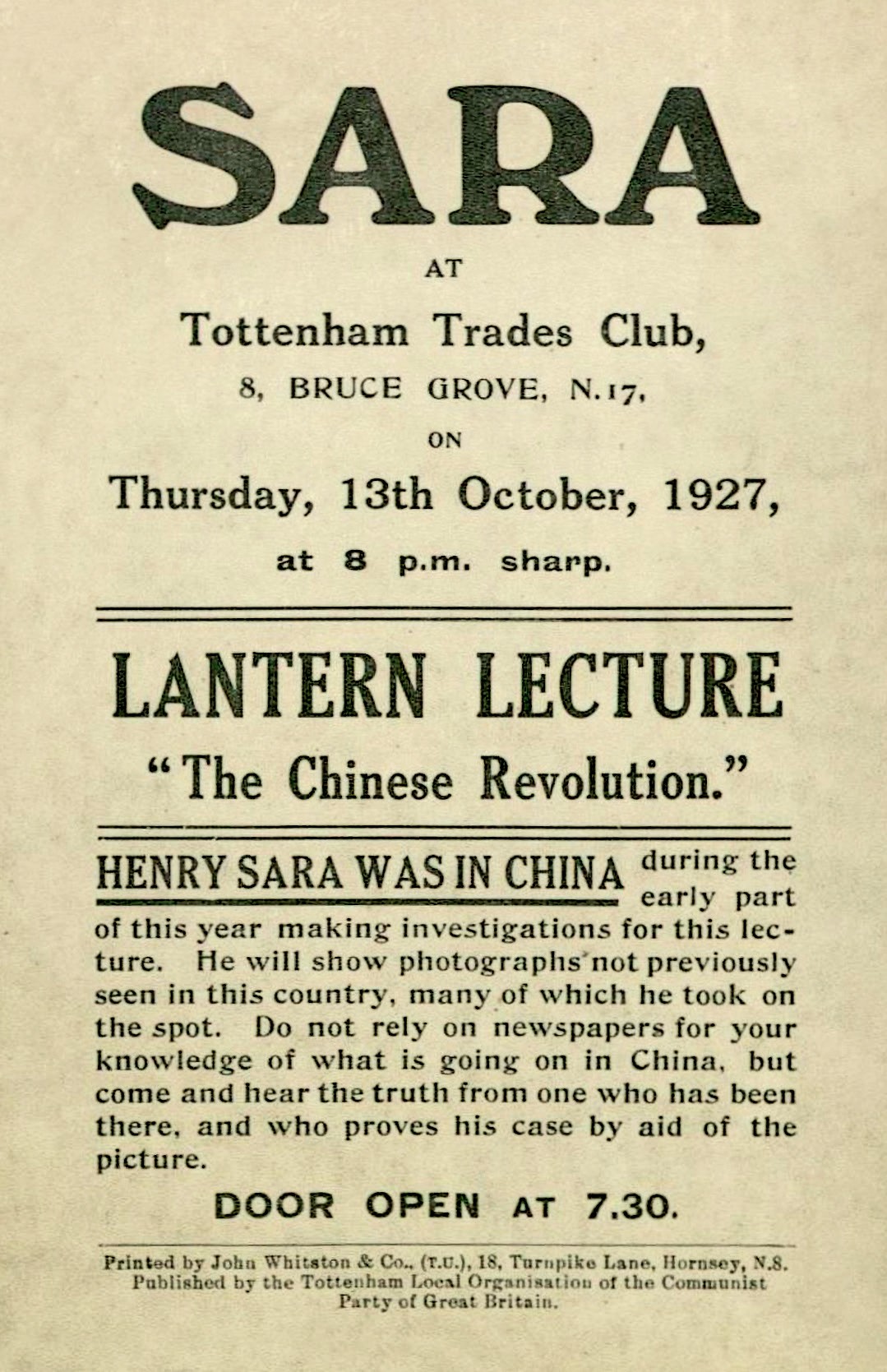
Henry Sara, a well-known but minor writer, left-wing political activist and public speaker, saw that photographic images could be embedded in his public political lectures. The result was a kind of primitive PowerPoint. But that was not all. As a communist, Sara’s photographic eye was drawn not only to portraits, landmark buildings or spectacular scenery but to the world of work, of ordinary people and, on his extensive world travels, to images of imperialism. He also supplemented his collection with many commercially available slides he purchased. Sara visited early Soviet Russia, China and colonial Asia.
Your organisation does not have access to this article.
Sign up today to give your students the edge they need to achieve their best grades with subject expertise
Subscribe