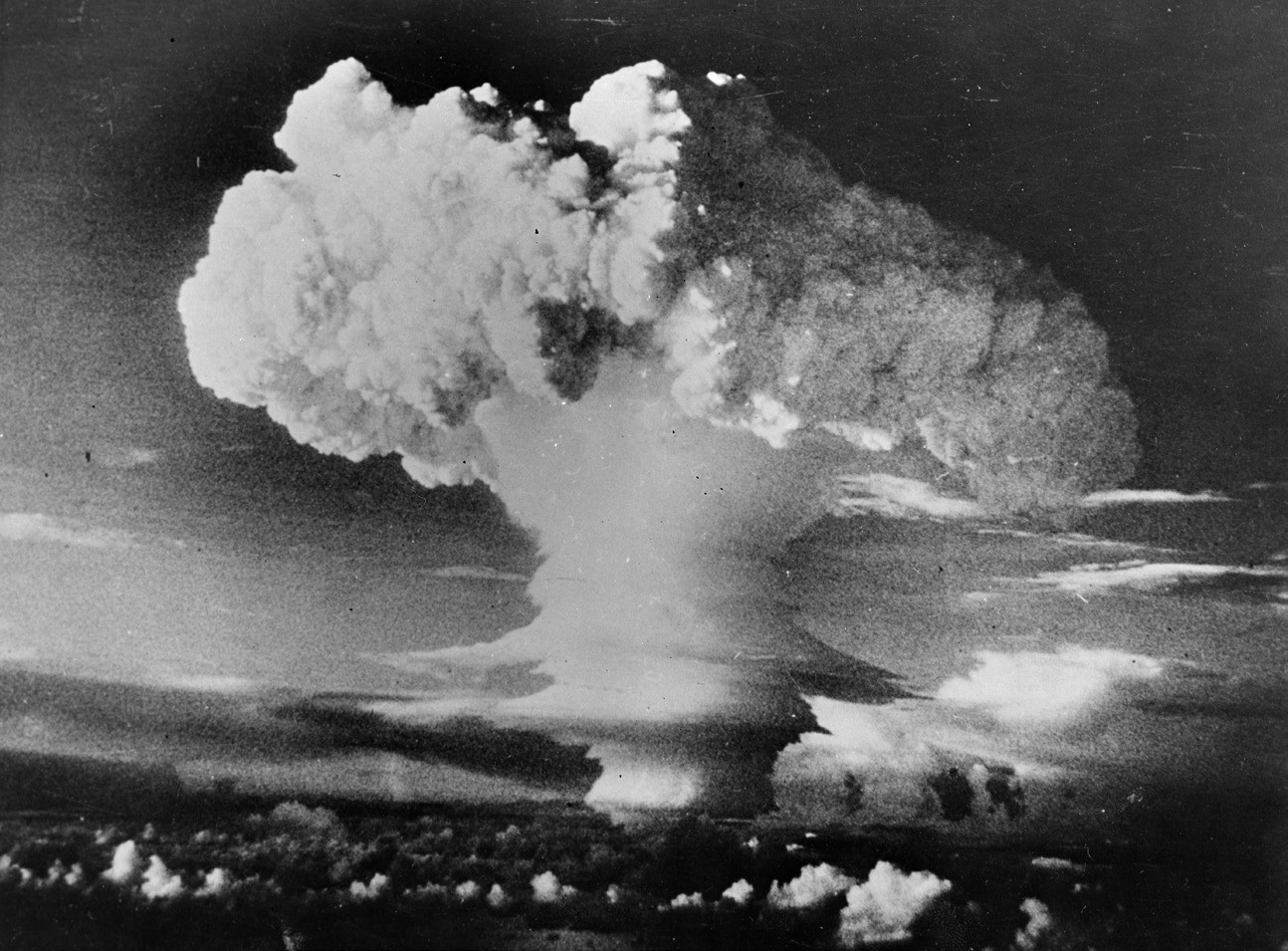
President Truman’s decision to use atomic weapons to end the war against Japan in the Pacific, despite the high cost in civilian casualties, resulted in a sudden end to the Second World War. It also led to a nuclear arms race against the Soviet Union that quickly escalated and led to a series of confrontations which nearly led to a Third World War.
The escalatory nature of the nuclear arms race was apparent from the start of the Cold War. The end of the war in Japan showed the Soviets that the Americans’ atomic weapons gave them a massive advantage and they needed to develop their own. There could be no period of ‘detente’ because Stalin had already ordered his scientists to develop their own atomic bomb using spies and espionage. By 1949 he had succeeded with the successful test of the RDS-1 ‘First Lightning’ device. The Americans realised they needed to counter this and ramped up their nuclear programme to try to maintain an advantage in both the development of nuclear weapons and their means of delivery.
Your organisation does not have access to this article.
Sign up today to give your students the edge they need to achieve their best grades with subject expertise
Subscribe