
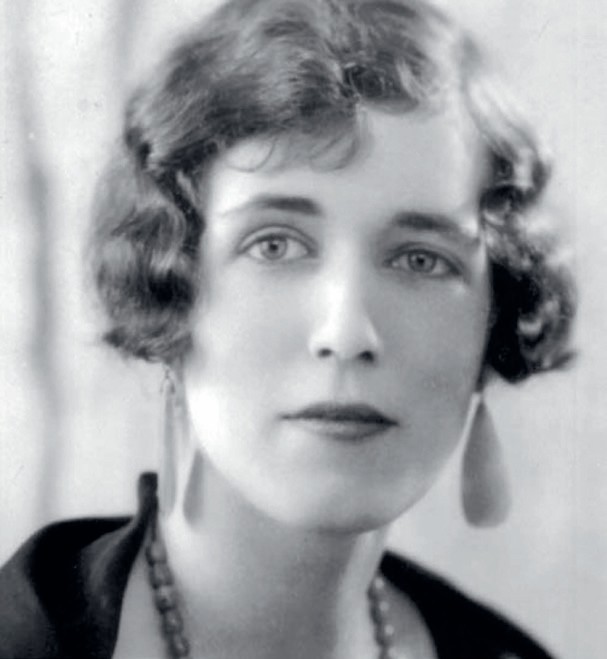
Georgette Heyer’s first novel, The Black Moth (1921), was published when she was just 19. At 23, after her father’s death, she became the family breadwinner, supporting her mother and two younger brothers. Before her devoted husband became a well-paid barrister, she also propped up his unsuccessful business. Needing to make good money, she experimented with contemporary as well as medieval fictional settings; a handful of detective thrillers proved mildly successful. But Heyer was not to rival Agatha Christie and the other big hitters of crime fiction’s pre-war golden age. Rather than being an also-ran within the era’s most popular genre, Heyer created her own. The sales figures don’t lie: as her biographer Jane Aiken Hodge notes, whereas the initial print run of Heyer’s swashbuckling romance Devil’s Cub (1932) was 115,000 copies, just 16,000 copies of her detective thriller Footsteps in the Dark were issued that same year.
These Old Shades (1926) tells of the encounter between the worldly and cynical Justin Alastair, Duke of Avon, and a street urchin eventually unmasked as the nobly born Léonie de Saint-Vire. Set in pre-Revolutionary France, this Cinderella story’s melodramatic tropes are expertly blended with elements drawn from the comedy of manners genre. Like Jane Austen, who updated a first draft called First Impressions and published it as Pride and Prejudice, Heyer successfully rewrote an earlier book: the title These Old Shades is a nod to its status as The Black Moth revived. An immediate hit, the novel has proved enduringly popular.
Your organisation does not have access to this article.
Sign up today to give your students the edge they need to achieve their best grades with subject expertise
Subscribe