
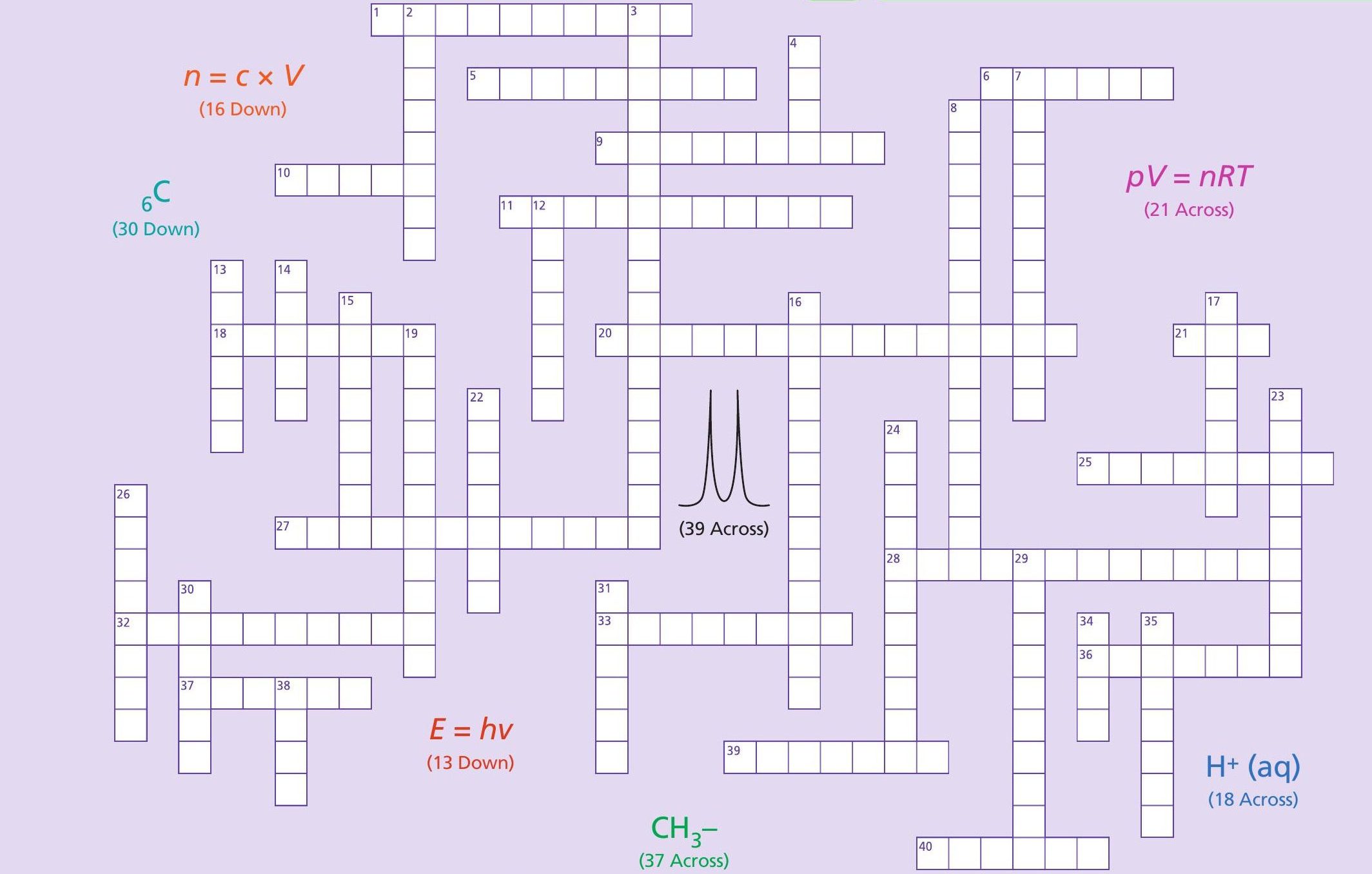
Abbreviations and symbols are widely used in chemistry to simplify complex terms and formulae. This makes communication more efficient across all areas of the subject, enabling chemists to convey complex information succinctly and clearly.
In organic chemistry, reaction mechanisms may use abbreviations like ‘Et’ for ethyl. In physical chemistry, key quantities such as pressure are often denoted by symbols like p (typically shown in italics to represent measurable properties). Abbreviations also appear in laboratory techniques, including spectroscopic methods, such as mass spectrometry (MS).
Your organisation does not have access to this article.
Sign up today to give your students the edge they need to achieve their best grades with subject expertise
Subscribe