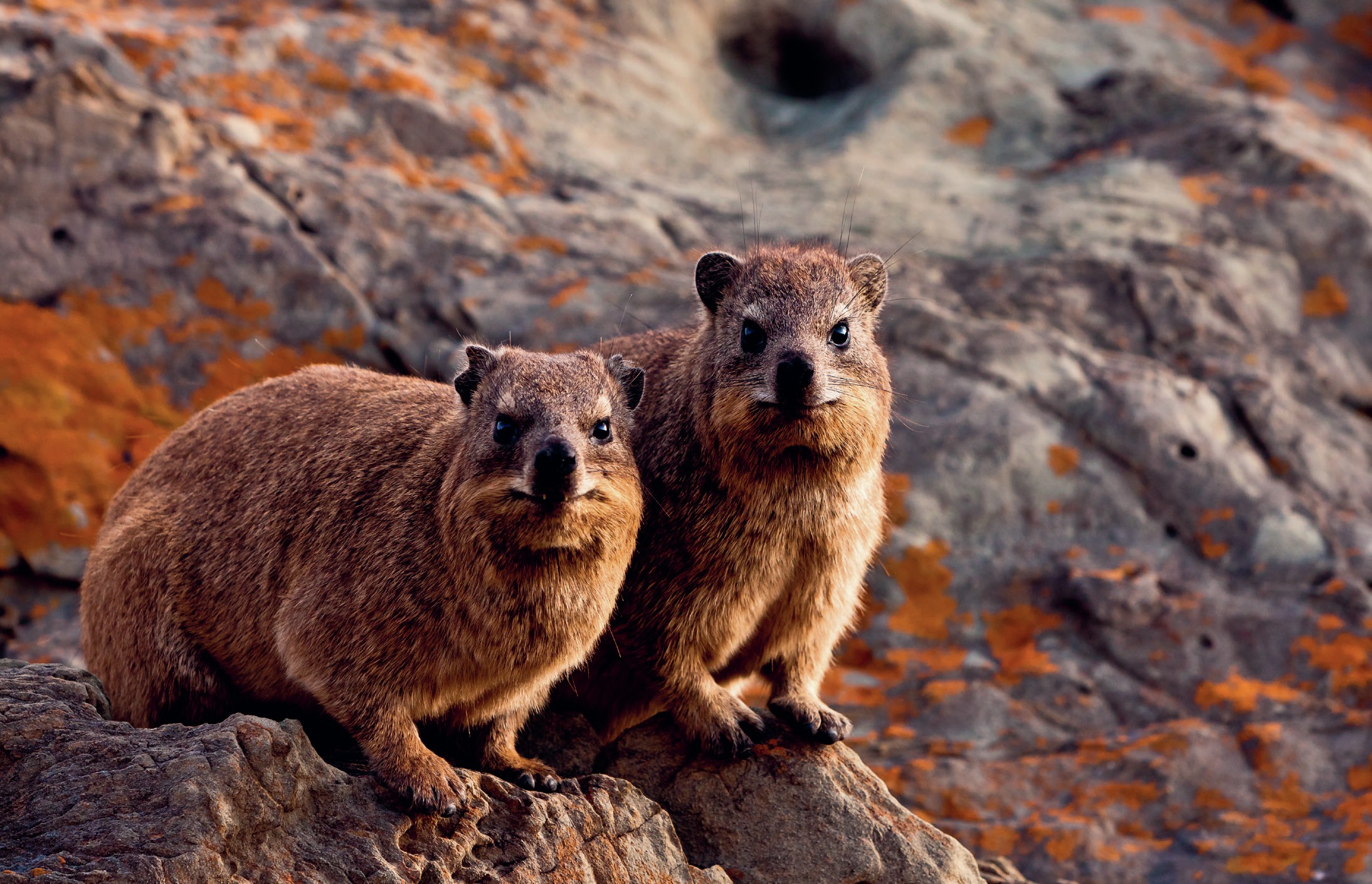
Among the rocky outcrops of Africa and the Middle East, peculiar animals – hyraxes – inhabit crevices and dens. With their rotund, rabbit-sized bodies, short ears and constantly growing incisors, you would be forgiven for assuming that these animals are close relatives of rodents, such as rats or marmots. Their small size, however, hides a fascinating genetic heritage. Their closest relatives are elephants and sea cows (manatees and dugongs), and their resemblance to rodents is the result of convergent evolution.
Superficially, hyraxes look like rabbits and rodents. Their shape, colour and size resemble those of a marmot or beaver. Humans have noted this similarity for a long time – the word ‘hyrax’ is derived from the word ‘shrewmouse’ in Greek. Hyraxes fall into three genera (see Box 1). The most common – rock hyraxes – typically live in harems, with young males leaving their families to set out alone and start their own community.
Your organisation does not have access to this article.
Sign up today to give your students the edge they need to achieve their best grades with subject expertise
Subscribe