
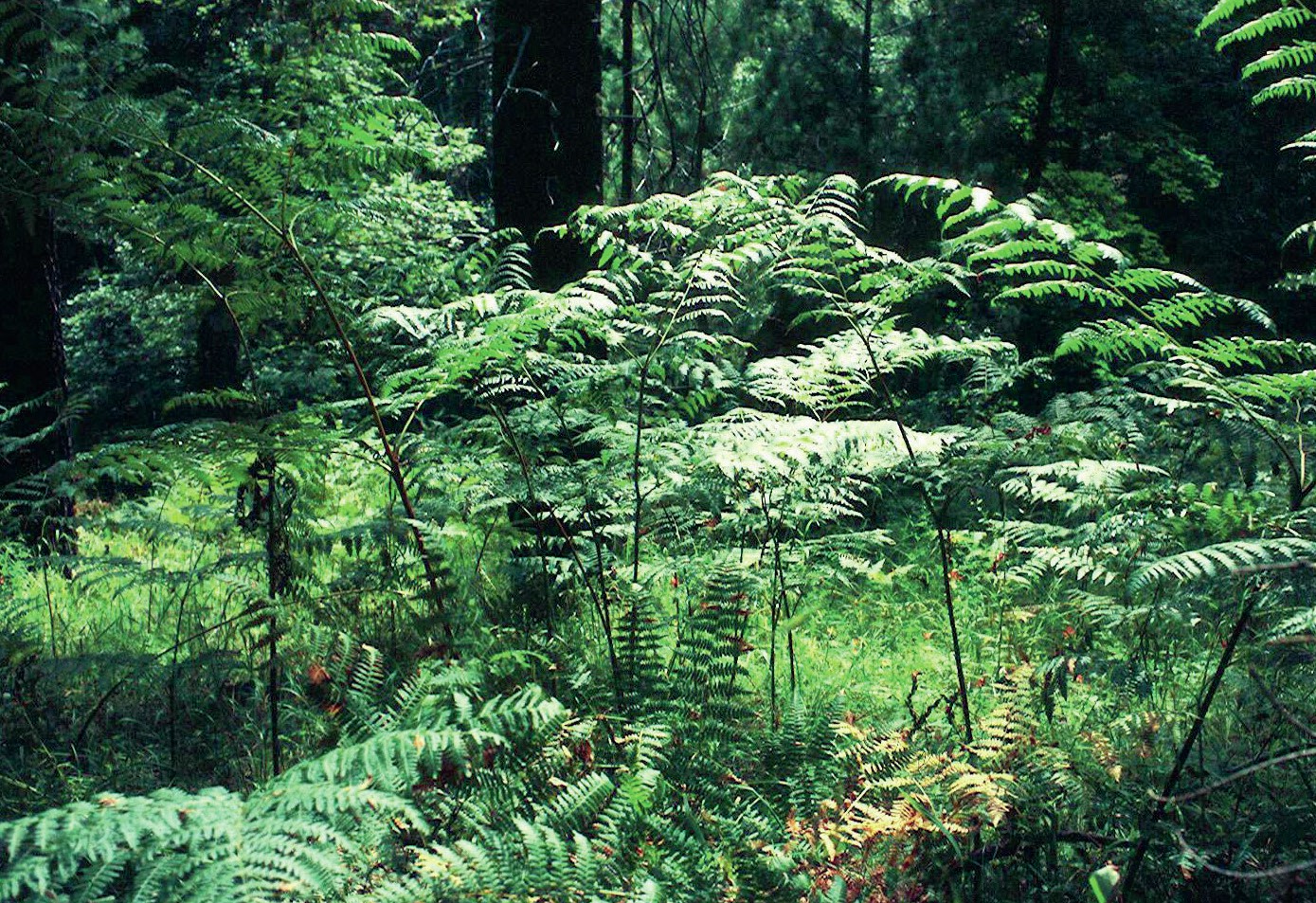
The bracken fern is one of the most successful plants on the planet. It grows on every continent except Antarctica, in a huge variety of habitats. A large part of its success reflects its high phenotypic plasticity. Bracken ferns grow in different ways that suit the environmental conditions. The underground stem sends up new leaves early in the spring in temperate zones. If conditions remain favourable, these leaves get a head start on other species and rapidly grow to form a closed canopy. If there is a late frost, however, the young leaves die, since they are not cold acclimated. But the underground stem has the solution to this problem – dormant buds start to grow, quickly replacing the lost leaves.
Bracken leaves emerging in open spaces with full sunlight produce thick, upright fronds with narrow leaflets, up to 2.5 metres tall. In contrast, leaves emerging in dense forest produce shorter, thin, dark green, spreading fronds – perfect for catching every glimmer of sunlight. If you encounter a stand of bracken at the edge of woodland, you will easily see the differences – all the leaves will probably have come from the same plant (the underground stems of an individual can span hundreds of metres). If a tree falls in the woodland and more light penetrates to the ground, the next bracken leaves to emerge will be the full-sunlight blueprint – a great example of phenotypic plasticity.
Your organisation does not have access to this article.
Sign up today to give your students the edge they need to achieve their best grades with subject expertise
Subscribe